
Ohio State Football Stadium Modernizing Audio Infrastructure for 100,000+ Fans
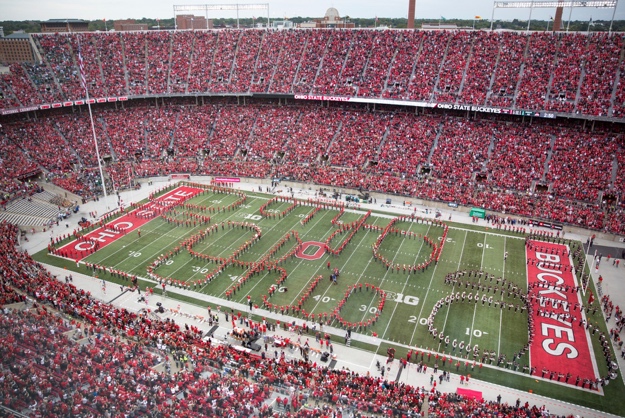
Ohio Stadium doesn't need a formal introduction or description when it comes to crowd noise, but the audio infrastructure responsible for cutting through that noise and delivering clear, reliable program audio to over 100,000 seats needs to be taken seriously. By 2024, the Q-SYS processing platform at the heart of it had reached a point where "still working" wasn't the same as "ready for what's next." American Sound was brought in to execute a full hardware migration, modernize the network architecture, and bring the firmware current, all while preserving a software design that the OSU operations team already knew and trusted.
The Challenge
The existing system was anchored by a pair of Q-SYS Core 250i processors that had served the stadium well, but the limitations in that system weren't really about processing power, they were about network flexibility. OSU's campus IT environment had matured considerably since the original deployment, and the audio system needed to exist within that environment as an active participant, not as an island. Getting Q-SYS onto the university's corporate network for remote monitoring through Reflect and VPN-based support access, while simultaneously keeping audio traffic isolated on its own VLAN, required a platform with more network interfaces and more architectural headroom than the 250i could offer.
The distributed I/O footprint across the stadium compounded the required upgrade work. Hardware at the B Deck delay positions, the Scoreboard IDF, the Post Game Press Room, and the Bunker all had to be addressed as part of the migration, and every one of those endpoints had to come back online without requiring a ground-up software redesign. The existing Q-SYS design file was solid, well-built, well-understood by the operations staff, and doing exactly what it was supposed to do. Our objective was to migrate around it, not replace it entirely.
One area that demanded careful upfront planning was Software Dante behavior across the new Core topology. Dante locks to a single LAN connection, which means the LAN A versus LAN B assignment has to be decided before hardware goes in, not after. That's an easy detail to overlook during planning and genuinely painful to unwind once you're commissioning, so we made sure it was addressed in the design phase rather than discovered during deployment.
The Solution
The Core 250i processors were removed and replaced with two Q-SYS Core 610 servers, a fundamentally more capable platform from a network perspective. Each Core 610 was configured with dual Ethernet connectivity: LAN A carrying audio traffic on a dedicated VLAN 525, keeping Q-SYS audio isolated and performing without contention, and the AUX LAN connection placing each Core on OSU's corporate network to enable Q-SYS Reflect remote monitoring and VPN access for our support team. That dual-network architecture is what makes it possible to respond to issues and troubleshoot remotely without necessarily sending someone onsite in Columbus, and it gives both the university's audio team and our internal engineers significantly more operational visibility than the previous platform allowed.
In the Control/Patch Room, the legacy I/O Frame was replaced with two Core 110fv2 units running in I/O Mode.
Across the stadium's distributed locations, the B Deck/450 Delay IDF received six QIO-L4o units to replace the two I/O Frames that had been serving the delay speaker positions. The Scoreboard IDF was outfitted with two QIO-AES8x8 units for digital AES connectivity. The I/O Flex-8 in the Post Game Press Room and the I/O-22 in the Bunker were both existing hardware that stayed in place, tested and verified once the new Cores were live and confirmed working in the new environment without modification.
On the software side, every Q-SYS device in scope was updated with the latest firmware. The existing design file was preserved intact, with new hardware remapped into the existing design. TX/RX flows were adjusted for the new Core topology, Dante routes were updated to reflect new LAN A addressing, and the touchpanel interface received a refresh to bring operator workflows up to current standards. Clean, documented, and ready for game day.
Core Solution Components:
Q-SYS Core 610 Servers — Two units replaced the legacy 250i processors, each configured with dual Ethernet connectivity
Core 110fv2 I/O Units — Two units deployed in I/O Mode to replace the existing I/O Frame in the Control/Patch Room, with all mic and line connections remapped to new hardware per documented I/O mapping.
QIO-L4o (x6) — Replaced two legacy I/O Frames at the B Deck/450 Delay IDF for distributed analog output to delay speaker positions.
QIO-AES8x8 (x2) — Replaced two legacy I/O Frames at the Scoreboard IDF with digital AES connectivity.
Firmware Update to 9.10.2 — All in-scope Q-SYS devices updated to the latest stable release as part of the migration.
Software Migration — Existing design file preserved and remapped to new hardware topology with no rebuild required.
Dante Routing Update — TX/RX flows and Dante routes adjusted to reflect new Core topology
Touchpanel Refresh — Operator interface updated with current workflows and improved user experience.
The Results
The stadium came out of this project with a Q-SYS platform that's built for how the university's IT environment operates today, not how it operated when the original system went in. The Core 610 servers give both the audio operations team and American Sound the ability to monitor system health remotely, respond to issues with real diagnostic visibility, and maintain the platform without requiring an on-site visit for every service event. The dual-LAN architecture means audio performance and network management coexist without compromise, each running on its own infrastructure the way they should.
Just as importantly, the existing software design survived the migration fully intact. The operations team didn't have to relearn their system or rebuild workflows that were already doing the job. The hardware is new, the firmware is current, the touchpanel feels fresh, but the institutional knowledge built into that design file is still there.
Ohio State Football Stadium Modernizing Audio Infrastructure for 100,000+ Fans
Ready to Transform Your Space?
Get in Touch

